

What You Need to Know Before You Sell a Flood Damaged House in Houston
Sell flood damaged house Houston often means choosing between making major repairs, listing with full disclosures, or selling as-is for speed and certainty. In Houston, flood history affects value, insurance, financing, and buyer demand, so the best option depends on your timeline, budget, and the condition of the property. The city’s unique geography, characterized by a complex network of bayous and the Addicks and Barker reservoirs, means that flood risk is a permanent consideration for any real estate transaction.
Here is what this guide covers:
- Texas disclosure rules for past flooding and water damage.
- How flood history affects home value in Houston neighborhoods.
- The real cost of repairs, mold treatment, and holding the property.
- When listing with an agent makes sense and when an as-is cash sale may be the better fit.
- Navigating the complexities of FEMA regulations and the “50% Rule.”
Flood-damaged homes are harder to sell through the traditional market because buyers worry about future flooding, mold, and insurance costs. Even after repairs, many properties still face longer days on market and lower offers than similar homes with no flood history. Understanding the technical aspects of flood zones, from the 100-year floodplain to the 500-year floodplain, is essential for any homeowner looking to exit a property that has taken on water.
Sell Flood Damaged House Houston With A Clear Understanding Of The Market
Selling after a flood starts with understanding how Houston buyers think. In many parts of the city, flood history changes how quickly a home sells, how lenders view the property, and how much buyers are willing to pay. The psychological impact of major events like Hurricane Harvey or the Tax Day floods remains a significant factor in local buyer sentiment.
Homes with prior flood damage often sell for less than similar homes that have never flooded. The discount varies by neighborhood, severity of damage, quality of repairs, and whether the property sits in a mapped flood zone. In areas like Meyerland, Memorial, and Braeswood, many buyers now review FEMA flood maps before they ever schedule a showing. If a home is in a high-risk flood area, buyers may also face higher insurance costs, which can reduce affordability and weaken demand.
Why Flood History Matters In Houston
Houston’s storm patterns, bayou systems, and flat terrain make flood risk a major part of local real estate decisions. A buyer is not just looking at the house itself. They are also looking at drainage, elevation, insurance premiums, and how the neighborhood performed in past storms. This is often referred to as “flood stigma,” which can persist even after a high-end renovation. Buyers may still worry about hidden damage behind walls, future mold, or the potential for another insurance claim later on.
The Cost Of Waiting To Sell
Many owners focus on repair bills but forget the cost of holding the house. While the property sits, you may still be paying taxes, insurance, utilities, mortgage payments, and lawn or maintenance costs. In Houston, property taxes are among the highest in the nation, and insurance premiums for homes with a flood history can be substantial. For many Houston homeowners, these holding costs can add up to $800 to $1,500 per month. If repairs drag on or a retail buyer backs out due to financing issues, those costs keep growing, eating away at your eventual net proceeds.
Texas Disclosure Laws For Selling A Flood Damaged House Houston
In Texas, sellers must disclose known material facts about the property. The Texas Real Estate Commission Seller’s Disclosure Notice was updated significantly following recent major storms to ensure buyers have more information about flood risks. This notice asks whether the home has experienced flooding, water penetration, or related issues.
That disclosure must include:
- Prior flood events or water intrusion, even if it was just a few inches.
- Mold history and any remediation work performed by professionals.
- Known insurance claims tied to flood damage or water damage.
- Whether the property is in a designated 100-year or 500-year floodplain.
- Whether the seller has ever received assistance from FEMA or the SBA for flood damage.
If you list with an agent, complete and accurate disclosure is critical to avoid future litigation. While some less reputable cash buying companies might suggest cutting corners on paperwork, professional firms like Greenlight Offer prioritize transparency, helping you document the property’s condition clearly to ensure a legally sound transaction.
The “50% Rule” and Substantial Improvement
One of the most overlooked aspects of selling a flood-damaged house in Houston is the FEMA “50% Rule.” If a home is located in a Special Flood Hazard Area (SFHA) and the cost of repairs or improvements equals or exceeds 50% of the structure’s market value, the building must be brought into full compliance with current floodplain management regulations. This often means the entire house must be elevated above the Base Flood Elevation (BFE), a process that can cost $100,000 or more. This regulation can make a traditional sale nearly impossible if the damage is severe and the owner cannot afford the elevation costs.
Repair The House Or Sell As-Is?
Both options can make sense depending on your goals. Listing on the open market may work well if the home had minor damage, repairs were completed professionally with all necessary permits, and you have time to wait for the right buyer who is comfortable with the flood history.
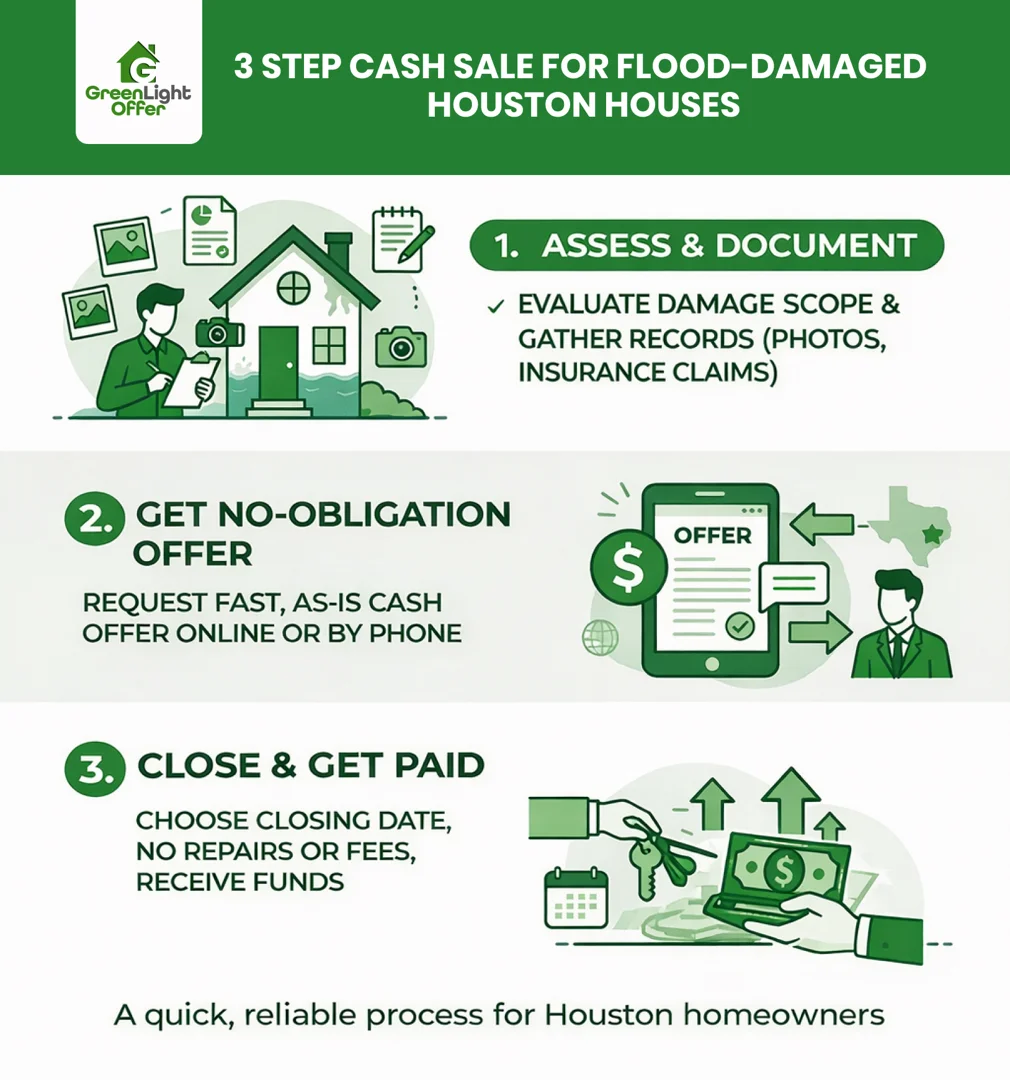
Selling as-is is often the better fit when repairs are costly, insurance is complicated, mold is present, or you need certainty. At Greenlight Offer, we buy houses exactly as they sit, including homes with flood damage, fire damage, probate issues, foreclosure concerns, or major deferred maintenance. This removes the risk of “repair creep,” where a simple drywall fix turns into a full electrical and plumbing overhaul once the walls are opened.
| Option | Best For | Main Tradeoff |
|---|---|---|
| List With An Agent | Homes with light damage and time for repairs | More prep, showings, inspections, and buyer financing risk |
| Sell As-Is For Cash | Homes with major damage or owners who need speed and convenience | Sale price reflects repair needs and risk |
What Flood Repairs Usually Cost
Flood damage can be much more than wet carpet and drywall. Water can affect insulation, wiring, HVAC systems, cabinetry, flooring, and framing. If drying is delayed, mold can spread quickly, requiring specialized remediation. In Houston’s humid climate, mold can begin to grow within 24 to 48 hours of water exposure.
| Repair Type | Estimated Cost (Houston Market) | Time To Complete |
|---|---|---|
| Mold Remediation | $3,500 – $15,000+ | 1 – 3 Weeks |
| Drywall And Paint | $7,000 – $20,000 | 2 – 4 Weeks |
| Electrical Or HVAC Repairs | $4,000 – $10,000 | 1 – 2 Weeks |
| Foundation Repairs | $5,000 – $15,000+ | 2 – 4 Weeks |
Houston’s clay soils can also create foundation movement after heavy moisture changes. That means some homes need both interior restoration and structural work, which makes budgeting harder. For owners who do not want to take on that uncertainty, our team offers a direct sale option. We provide the highest possible fair cash offers based on local values, repair needs, and current market conditions, and sellers make no repairs at all.
Can You Sell With An Open Insurance Claim?
Yes, in many cases you can. A home sale and an insurance claim are often separate matters, though the details depend on the policy, claim status, and closing documents. Some sellers choose to “assign the claim” to the buyer, while others wait for the claim to settle before closing. We regularly work with Houston sellers who have open or pending claims. Our team coordinates with the title company so the paperwork is handled correctly and the transaction stays clear and organized.
How Long Does The Sale Process Take?
A traditional financed sale can take 60 to 90 days or more, especially when a property has flood history. Inspections, lender conditions, and insurance questions often slow everything down. Many retail lenders are hesitant to provide mortgages on homes with active damage or unresolved mold issues, which can lead to deals falling through at the last minute.
Greenlight Offer is built for sellers who need certainty. We can close in as little as 14 days, and sometimes on a timeline that better matches your move, claim process, or family situation. This speed is particularly valuable for those who need to relocate quickly or stop the accumulation of holding costs.
How We Evaluate A Flood-Damaged Property
A fair cash offer should be based on actual local data, not vague estimates. Our team looks at the property’s after-repair value (ARV), the likely repair scope, neighborhood sales, and the cost of holding and reselling the home. We also account for the realities of each area, including drainage patterns, floodplain location, and buyer demand in specific Houston submarkets. That local knowledge matters because a flood-damaged home in Katy may be priced differently than a similar one in Pearland or The Woodlands.
Some cash buyers earn a bad reputation by making very low offers or changing terms late in the process. These predatory practices are common among less experienced or less ethical companies that prioritize volume over service. At Greenlight Offer, we explain our numbers clearly, cover 100% of closing costs and fees, and the amount we present is the amount you can expect at closing. We believe in an educational approach that empowers the homeowner to make the best decision for their family.
What Homeowners Say About Working With Us
Trust matters when you need to sell a damaged house quickly. Homeowners often tell us they value clear communication, straightforward offers, and a process that removes stress instead of adding to it. Dealing with a flooded home is emotionally taxing; the last thing a seller needs is a complicated or deceptive sales process.
You can review verified feedback from local sellers here: Google Reviews. We encourage homeowners to compare experiences, ask questions, and choose the company that communicates honestly and follows through on its commitments.

Frequently Asked Questions About Selling A Flood Damaged House In Houston
Can I sell my Houston house if it still has mold after flooding?
Yes. You can still sell, but mold usually makes a traditional financed sale harder because buyers and lenders may require remediation first. An as-is sale is often simpler when the property has active moisture or mold concerns, as professional buyers have the resources to handle remediation safely.
Do I have to disclose flood damage if the house was repaired years ago?
Yes. Texas sellers generally must disclose known past flooding or water penetration, even if repairs were completed. Under the Texas Property Code, failing to disclose known flood history can lead to significant legal liability after the sale. Clear disclosure helps reduce the risk of disputes after closing.
Is listing with an agent or selling for cash better after a flood?
It depends on the home and your goals. If the damage was minor and the house is fully repaired, listing may bring more interest. However, if speed, convenience, and avoiding the risk of a buyer’s financing falling through matter most, an as-is cash sale can be the more practical choice.
Can I sell a flood-damaged house if I still have a mortgage?
Yes. At closing, the mortgage payoff is typically handled through the title company using sale proceeds. Any remaining equity goes to you after liens and standard closing items are resolved. If the house is worth less than the mortgage (underwater), you may need to discuss a short sale with your lender.
Will flood history always reduce my home’s value?
Not always by the same amount, but it usually affects value in some way. The impact depends on the neighborhood, severity of damage, quality of repairs, floodplain status, and current buyer demand. In some high-demand areas, the land value may be high enough that the flood history of the structure has a smaller impact on the total price.
What is an Elevation Certificate and do I need one?
An Elevation Certificate (EC) is a document that lists a building’s location, lowest point of elevation, flood zone, and other characteristics. It is used to determine the proper flood insurance premium rate. While not always required for a cash sale, having one can help a buyer understand the future insurance costs associated with the property.
Sell Flood Damaged House Houston With The Right Strategy
Selling a flooded home in Houston is rarely just about the damage itself. It is also about disclosure, repair cost, insurance questions, buyer confidence, and how much time and uncertainty you are willing to take on. Whether you are dealing with the aftermath of a major storm or a localized pipe burst, the path forward requires a clear understanding of your property’s value and the local market’s expectations.
At Greenlight Offer, we help Houston-area owners make that decision with clear information and a straightforward process. We eliminate the need for expensive repairs, stressful showings, and the uncertainty of traditional financing. If you want to sell flood damaged house Houston without repairs, fees, or closing costs, contact our team today for a no-obligation fair cash offer and a closing timeline that works for you. Let us help you move forward with confidence.
