

If you need to sell house with termite damage Houston, you have more options than you may think. Termite damage is common throughout Southeast Texas, and while it can complicate a traditional sale, it does not have to stop you from moving forward quickly or profitably.
Greenlight Offer has helped Houston homeowners sell in difficult situations since 2016.
This guide walks through what Texas law requires you to disclose, what traditional buyers and lenders demand, how much termite damage can cut your sale price, and why many Houston sellers choose to skip repairs entirely and sell as-is for cash.
How Common Are Termites in Houston?
Houston sits in one of the most termite-active regions in the entire country. The humid, warm climate of Southeast Texas is ideal for Formosan and Eastern subterranean termites, both of which can cause significant structural damage before a homeowner even notices a problem.
According to the U.S. Environmental Protection Agency, termites cause an estimated $5 billion in property damage across the United States each year. Texas consistently ranks among the states with the highest termite activity, and Houston’s Harris County is considered a high-risk zone by pest control professionals.
The issue is not just the termites themselves. In many Houston homes, damage to floor joists, wall framing, and subfloor is discovered only during a pre-sale inspection or WDI (Wood-Destroying Insect) report. At that point, sellers face a difficult decision: repair it, disclose it, or find a buyer who will take the property as-is.
Texas Termite Disclosure Requirements for Sellers
Texas real estate law is clear on this point. Sellers must disclose known material defects that affect the value or desirability of the property. Termite damage and a history of termite infestation both qualify as material defects under the Texas Property Code.
Specifically, Texas sellers are required to complete the Texas Seller’s Disclosure Notice (TREC OP-H), which includes questions about pest damage, wood rot, and previous infestations. Completing this form honestly is not optional.
According to the Texas Real Estate Commission (TREC), disclosure is required for defects that a seller is aware of. If you discovered termite damage and had it treated, you still need to note the history on the disclosure form.
There is a key exception: selling directly to a cash investor typically bypasses the standard TREC disclosure process, since those transactions do not usually involve a traditional sales contract requiring the OP-H form. Always confirm with your buyer and a Texas attorney what applies in your specific sale.
What Lenders and Traditional Buyers Require
This is where selling a termite-damaged home through the traditional market gets complicated. Most mortgage lenders, including FHA and VA loan programs, will not approve a loan on a home with an active termite infestation or significant unrepaired structural damage.
What a standard buyer or lender typically requires:
- A current WDI (Wood-Destroying Insect) inspection report, sometimes called a termite letter, completed by a licensed pest inspector
- Proof of termite treatment if an active infestation is found
- A treatment warranty or bond, often a one-year renewable policy
- Repair of any structural damage caused by the infestation before closing
- A re-inspection to confirm treatment success
VA loans are especially strict. The VA requires that any home purchased with a VA loan is free from wood-destroying insects and that all damage is repaired. An appraiser discovering active termites or structural damage during the appraisal process will flag the property as ineligible for financing until repairs are complete.
FHA loans follow similar guidelines. The FHA appraiser is required to note any evidence of wood-destroying pest damage, and the loan cannot proceed until the seller resolves the issue.
This means that if your buyer needs financing, you are likely looking at treatment costs, structural repairs, re-inspection fees, and possibly delays of weeks or months before closing can happen. If you are already dealing with a difficult situation, like an inherited property or a home you need to sell quickly due to job relocation, those delays can be especially painful. Greenlight Offer has helped homeowners in exactly those situations through their inherited property program and job relocation service.
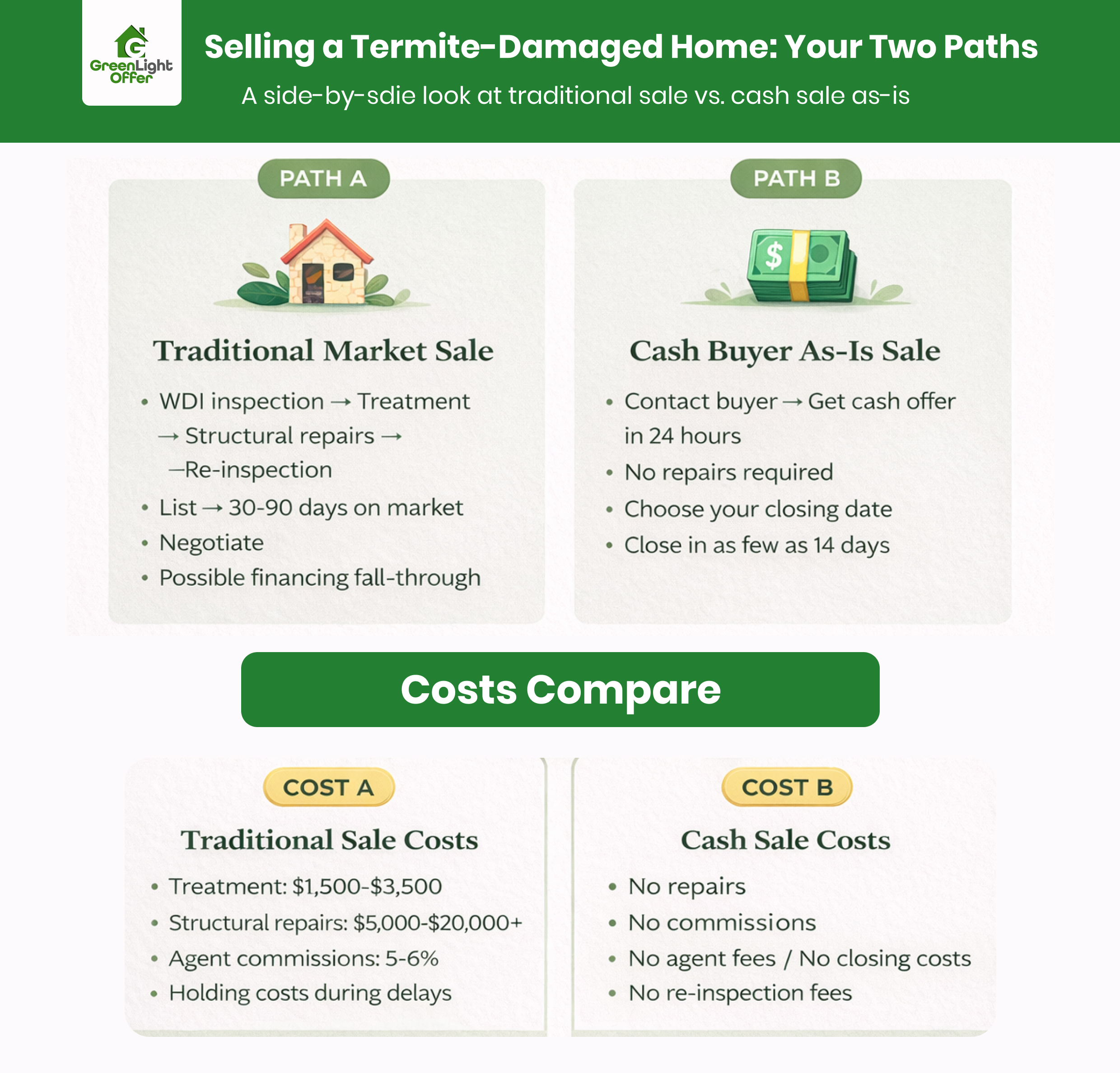
Sell As-Is to a Cash Buyer: No Treatment Required
Selling a house with termite damage in Houston does not have to involve spending thousands of dollars before you can move on. Cash buyers like Greenlight Offer purchase homes in their current condition, termite damage included.
This works because cash buyers are not subject to lender requirements. There is no bank telling them the property needs a WDI clearance before the deal can proceed. They evaluate the home in its current state, factor the repair costs into their offer, and close without the back-and-forth that comes with traditional transactions.
Here is what the process typically looks like with Greenlight Offer:
- Submit your property details online or by calling (713) 588-5824. No inspection or paperwork needed upfront.
- Receive a no-obligation cash offer within 24 hours based on your home’s condition and the local Houston market.
- Pick your closing date. Greenlight Offer can close in as little as 14 days, or work around your schedule if you need more time.
There are no agent commissions, no closing costs, no repair demands, and no deal falling apart because a lender rejected the property. For homeowners dealing with termite damage alongside other problems, like code violations or financial pressure, this path is often significantly simpler. Greenlight Offer also handles situations involving code violations and properties in financial distress.
How Much Will Termite Damage Reduce Your Sale Price?
The price impact depends on two things: the severity of the structural damage, and whether you are selling on the open market or directly to a cash buyer.
| Damage Level | Typical Repair Cost | Estimated Price Impact (Open Market) |
|---|---|---|
| Minor (surface damage, no structural) | $500 – $1,500 | 1% – 3% below market |
| Moderate (partial joist or subfloor damage) | $3,000 – $8,000 | 5% – 10% below market |
| Severe (load-bearing walls, beams affected) | $10,000 – $25,000+ | 15% – 25%+ below market |
On the open market, buyers and their agents use the damage as negotiating leverage. Even after you complete repairs, some buyers will still push for an additional price reduction because of the history. The stigma of prior termite damage is real in Houston’s competitive real estate market.
With a cash buyer, the offer accounts for damage upfront. You do not spend money on repairs only to have a buyer negotiate you down further. The price you agree on is the price you get at closing, with no surprises.
The Hidden Cost of Fixing Termite Damage Before Selling
Many sellers assume that treating and repairing termite damage before listing will result in a higher net profit. That logic sounds reasonable, but the math often does not support it once you factor in everything involved.
Costs sellers frequently underestimate:
- Pest treatment: Basic fumigation or spot treatment typically runs $1,500 to $3,500 in the Houston area
- Structural repairs: Replacing damaged joists, subfloor sections, or wall framing commonly costs $5,000 to $20,000 depending on access and extent
- Re-inspection fee: Another $150 to $400 to get a clean WDI report post-treatment
- Holding costs during repair and listing: Mortgage payments, insurance, property taxes, and utilities while the work is done and the home sits on the market
- Agent commissions: Typically 5% to 6% of the final sale price on a traditional listing
- Buyer negotiated reductions: Even after repairs, many buyers discount for the history
If you are also navigating a situation like a difficult tenant, medical debt, or facing foreclosure, waiting months to sell is not a neutral choice. Every month spent managing a damaged property is money and energy that could go toward your next chapter. Greenlight Offer helps sellers in complex situations, including those dealing with tenant problems and those trying to avoid foreclosure.
Frequently Asked Questions on How to Sell House with Termite Damage Houston
Do I have to disclose termite damage to buyers in Texas?
Can I sell a house with active termites in Houston?
What is a WDI report and do I need one to sell my house?
How much does termite damage reduce a home’s value in Houston?
Is it better to repair termite damage or sell as-is in Houston?
Ready to Sell a House with Termite Damage in Houston?
Termite damage does not have to put your sale on hold. Thousands of Houston homeowners have navigated this exact situation, and the best path forward depends on how much you want to spend, how long you want to wait, and how much uncertainty you are willing to accept.
For sellers who want a clean exit without months of repairs, inspections, and financing contingencies, selling a house with termite damage in Houston directly to a cash buyer is often the most practical choice. You skip the contractor bids, the lender requirements, the re-inspections, and the open houses. You choose your closing date and walk away with cash in hand.
Greenlight Offer has been buying Houston-area homes in all conditions since 2016. No repairs needed. No agent fees. No hidden costs. Whether you are dealing with termite damage, fire damage, inherited property complications, or any other situation that makes a traditional sale difficult, the team at Greenlight Offer can give you a fair, no-obligation offer within 24 hours.