


Why Selling a House with a Tenant Requires a Clear Plan
Selling a house with a tenant is legally possible in Texas, but it requires careful planning and clear communication. Here’s what you need to know:
- You cannot evict a tenant just to sell – Texas law requires valid legal grounds for eviction, and selling the property is not considered “just cause.”
- The lease stays with the property – When you sell, the new owner inherits the existing lease agreement and all its terms.
- You have three main options – Sell with the tenant in place (appeals to investors), negotiate for them to leave early (often using “cash for keys”), or wait until the lease expires.
- Proper notice is required – You must provide at least 24 hours’ written notice before showings in Texas.
- Vacant properties typically sell for more – Properties without tenants can sell for up to 20% more because they appeal to a wider buyer pool and show better.
Selling a house with a tenant presents unique challenges. You’re navigating tenant rights, lease agreements, showing restrictions, and a potentially limited buyer pool. Around 56% of property sales fall through, and tenant-occupied properties face even steeper odds if not handled correctly.
The presence of a tenant changes everything about your sale. Owner-occupant buyers, who typically pay top dollar, often want immediate possession. Investor buyers expect current rent rolls and cooperative tenants. Meanwhile, your tenant has legal rights that must be respected throughout the process, from proper notice for showings to the transfer of their security deposit.
At Greenlight Offer, our team has helped dozens of Houston homeowners successfully steer the complexities of selling a house with a tenant. Whether you’re facing foreclosure, divorce, or simply need to move on from a rental property, we understand the unique pressures of managing this process while respecting both your financial needs and your tenant’s legal rights.
Understanding Your Legal Position and Tenant Rights
When considering selling a house with a tenant in Houston or any of the surrounding Texas areas we serve, understanding your legal obligations is paramount. Texas landlord-tenant laws are designed to protect both parties, and we must always operate within these guidelines. The lease agreement you have with your tenant is the foundation of your legal position, and it dictates many aspects of the sale process.
In Texas, a tenant’s right to stay in the property is legally protected. The new owner, upon purchase, steps into your shoes as the landlord and must uphold the terms of the existing lease agreement until its expiration date. This includes honoring the current rental rate and duration, regardless of any change in ownership. As we’ve seen, the lease is king.
You are also legally obligated to provide proper notice for entry into the property, especially for showings. While the lease agreement often specifies this, a minimum of 24 hours’ written notice is generally considered reasonable practice in Texas. This respects your tenant’s privacy and ensures you are complying with the law.
Finally, the security deposit must be properly transferred to the new owner, a critical step we’ll cover in more detail. yes, you can sell a property that is occupied, but you must honor the existing lease agreement.
Fixed-Term vs. Month-to-Month Leases
The type of lease agreement your tenant has significantly impacts your strategy for selling a house with a tenant.
A fixed-term lease spans a specified period, typically six to 12 months, during which both you and the tenant are bound by its terms. If you sell the property during this period, the buyer inherits the tenant and must honor the remainder of the lease. This can limit your buyer pool, as owner-occupants often want immediate possession. However, it can be attractive to investor buyers looking for immediate rental income.
On the other hand, month-to-month tenancies offer much greater flexibility. In Texas, you or a new buyer typically only need to provide the legally required notice to end the tenancy, which is usually 30 days. This means you can often coordinate the tenant’s move-out with your sale timeline, potentially allowing you to sell a vacant property. This flexibility can significantly impact your sale timeline and the types of buyers you attract.
Can I Evict a Tenant Just to Sell the Property?
This is a common question we hear from homeowners in Houston. The short answer is generally no. In Texas, you cannot evict a tenant solely because you want to sell the property. Selling a property is not considered “just cause” for eviction.
A landlord must have a legitimate, legally recognized reason to evict a tenant, such as non-payment of rent, lease violations, or engaging in illegal activities on the property. If you attempt an eviction without proper cause or fail to follow the strict legal process, you could face severe penalties for illegal eviction. A landlord cannot break a lease unless they have cause and follow proper legal procedure. In many jurisdictions, the landlord must wait until the lease ends or negotiate with the tenant to vacate.
Attempting to evict a tenant without a valid legal reason can lead to costly delays, legal fees, and reputational damage. It’s always advisable to consult with a legal expert familiar with Texas landlord-tenant laws before taking any steps that could be construed as an improper eviction. Our team can help you understand these nuances and ensure you avoid such pitfalls.
The Big Decision: Selling Occupied vs. Selling Vacant
One of the most critical decisions when selling a house with a tenant is whether to sell it occupied or vacant. This choice profoundly impacts your buyer pool, the property’s presentation, and ultimately, your potential sale price. We’ve seen how this decision plays out in the Houston market.
Selling an occupied property primarily appeals to investor buyers. These buyers are often looking for immediate rental income and appreciate having a tenant already in place. However, it can deter owner-occupants who want to move in right away and might be wary of inheriting a tenant.
Selling a vacant property, on the other hand, appeals to a much wider audience, including both owner-occupants and investors who prefer to select their own tenants or make renovations. Vacant homes are also easier to show, stage professionally, and often allow for necessary repairs or cosmetic updates without tenant disruption.
Our experience shows that selling a vacant property can lead to a sale price up to 20% higher than selling with tenants still living there. This potential increase in value often outweighs the cost of vacancy, which includes carrying costs like mortgage payments and utilities during the sale period.
Comparing an Occupied Sale vs. a Vacant Sale
Here’s a quick overview of the pros and cons to help you weigh your options:
| Feature | Occupied Sale | Vacant Sale |
|---|---|---|
| Pros | Provides continuous rental income until closing and is attractive to investors seeking immediate cash flow. You also avoid vacancy costs during the sale period. | Appeals to a wider buyer pool, including owner-occupants. It’s easier to show, stage, and make repairs, often leading to a higher sale price (up to 20% more) and a faster closing. |
| Cons | Involves showing challenges, limited buyer appeal, and the potential for lower offers. A tenant’s cooperation is crucial, as their behavior or the property’s condition can deter buyers. | Means no rental income during the sale, and you must cover all carrying costs. It also takes time and effort to get the property vacant, with a risk of move-out damage. |
A Landlord’s Guide to Selling a House with a Tenant
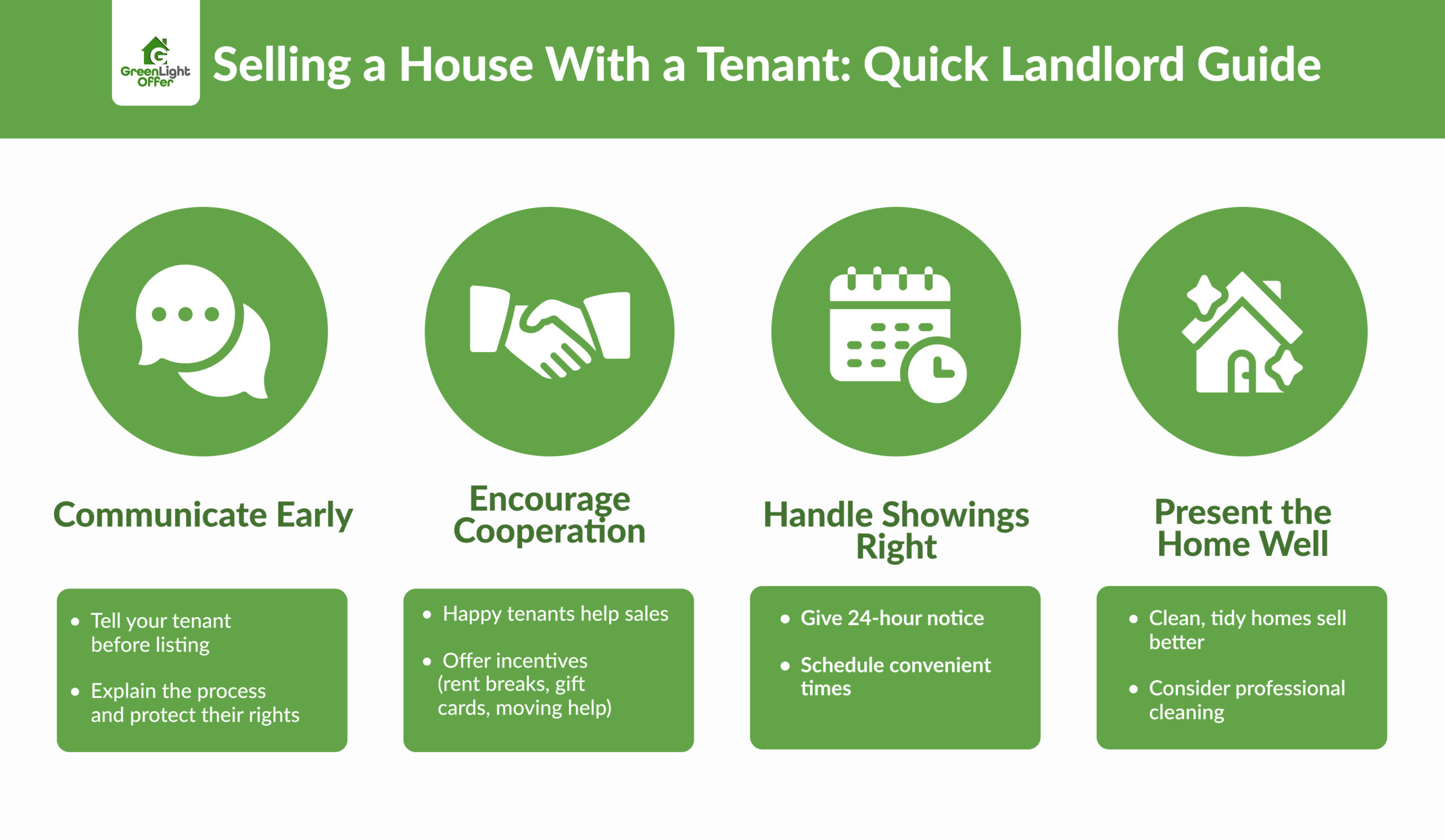
When it comes to selling a house with a tenant, communication is genuinely key. A smooth process hinges on maintaining a good relationship with your tenant and minimizing disruption to their daily life. While you’re focused on selling, this is their home, and their cooperation can make or break your sale.
Our team at Greenlight Offer understands the delicate balance required. We aim to guide you through this process while protecting your investment and ensuring a respectful interaction with your tenant.
Step 1: Communicate Clearly and Early with Your Tenant
The first and most crucial step is to communicate clearly and early with your tenant. Imagine scrolling through property listings online and seeing the space where you’re living; it could be jarring and upsetting for a tenant to find out about the sale in that way. While not always a legal requirement to inform them about the listing itself, it’s considered best practice and can set the foundation for a smooth sale.
We recommend sending an initial notification letter informing them of your intention to sell. Explain the process, reassure them of their rights (especially that their lease will be honored), and set clear expectations for showings and property access. Being transparent and respectful from the outset can foster cooperation and prevent misunderstandings.
Step 2: Incentivize Tenant Cooperation
A happy tenant helps the sale; an unhappy tenant can break a sale. If your tenant feels inconvenienced or disrespected, they might not cooperate with showings, keep the property tidy, or even actively deter potential buyers. We’ve seen it happen.
To encourage their cooperation, consider offering incentives. This could include a temporary rent reduction during the showing period, gift cards for cleaning or for leaving during showings, or even covering a portion of their moving expenses if they agree to an early departure. Negotiation options might also include forgiving the last month’s rent or refunding the security deposit in advance. Documenting all agreed-upon terms in writing ensures protection for both parties.
Step 3: Navigating Showings and Property Condition
Navigating showings requires careful planning and adherence to Texas laws. You must provide proper notice, typically at least 24 hours’ written notice, before entering the property for showings or inspections. Scheduling convenient times that work for both the tenant and potential buyers is crucial.
The tenant’s role in property upkeep can significantly impact buyer perception. While you can’t force them to deep clean for every showing, a generally tidy home makes a much better impression. Consider offering to hire a cleaning service periodically or a landscaping service to maintain the exterior.
You can request that your tenant leave during showings, but you generally cannot force them. This is why fostering a good relationship and offering small incentives can be very effective in ensuring the property is shown in the best possible light without the tenant present.
Strategies for Vacating the Property Before Sale
For many sellers in Houston and the surrounding areas, the goal is to sell a vacant property. A vacant home attracts the widest range of buyers, including owner-occupants, and allows for professional staging and any necessary repairs, ultimately maximizing your final sale price. The strategy you employ to achieve vacancy will depend heavily on your tenant’s current lease agreement.
For Month-to-Month Tenancies
If your tenant is on a month-to-month lease, you have the most flexibility. In Texas, you can typically end a month-to-month tenancy by providing the legally required written notice, which is usually 30 days. This allows you to plan the tenant’s move-out date to align with your desired sale timeline.
Once notice is given, you can proceed with a final walkthrough after the tenant vacates. This is important for assessing any damages beyond normal wear and tear and for the proper return of their security deposit within the legal timeframe. This approach allows you to prepare the property for sale without the complexities of an occupied showing schedule.
For Fixed-Term Leases: The ‘Cash for Keys’ Method
When dealing with a fixed-term lease, you have fewer options for immediate vacancy. This is where the ‘cash for keys’ method often comes into play. Cash for keys is a negotiation where you offer a financial incentive to your tenant to voluntarily terminate their lease early and vacate the property.
This can be a win-win solution: the tenant receives funds for relocation, and you gain control of your property sooner. The amount offered can vary widely, but negotiation options might include forgiving the last month’s rent, refunding the security deposit in advance, or covering relocation expenses. It’s essential to document all agreed-upon terms in writing and have both parties sign the agreement. This not only protects you but also ensures clarity for the tenant.
The Patient Approach: Waiting for the Lease to Expire
Sometimes, the most straightforward strategy when selling a house with a tenant on a fixed-term lease is simply to wait for the lease to expire. This removes the need for complex negotiations or incentives, guaranteeing you a vacant property at a predetermined date.
To implement this, you would notify your tenant of non-renewal well in advance, according to the terms of your lease and Texas law. The pros of waiting include guaranteed vacancy without additional cost (like ‘cash for keys’ payments) and avoiding potential tenant disputes. However, the cons include potential market changes during the waiting period and the continued carrying costs (mortgage, taxes, insurance) of the property until the tenant vacates and the sale closes.

Frequently Asked Questions about Selling a House with a Tenant
How much notice do I have to give a tenant for showings in Texas?
In Texas, the lease agreement usually specifies the notice period. If not, providing at least 24 hours’ written notice is considered reasonable and is standard practice. This respects your tenant’s privacy while allowing you to market the property effectively.
What happens to the security deposit when I sell my Houston rental property?
When you sell a tenanted property in Texas, you must transfer the security deposit to the new owner. You are relieved of this liability once the new owner provides the tenant with a signed statement acknowledging they have received the deposit. It’s crucial to document this transfer during closing.
Can I require my tenant to leave the house for showings?
You can request that your tenant leave during showings, but you generally cannot force them. This is why fostering a good relationship and offering small incentives, like a coffee shop gift card, can be very effective in ensuring the property is shown in the best possible light without the tenant present.
The Easiest Way of Selling a House with a Tenant in Houston
The process of selling a house with a tenant is filled with legal complexities, potential financial risks, and a good deal of stress. You have to manage tenant communication, schedule showings, and hope for their cooperation, all while your property may sell for less than its true value.
“Working with Mr. Sean and his team was a great success and opportunity. We had a bad tenant in our house, who we couldn’t remove. Sean and his team took care of all the necessary paperwork to get rid of the house tenant. We was able to also sell him the house and have a peace of mind.
Thank you.” – A real testimonial from our Google reviews.
At Greenlight Offer, we eliminate these problems entirely. As Houston’s trusted local home buyer, we specialize in purchasing properties with tenants. You don’t have to worry about showings, repairs, or difficult tenant negotiations.
We make a fair cash offer and handle the rest, allowing you to sell your house fast and move on. We cover all closing costs and fees, and we buy houses in any condition (excluding mobile homes), offering a minimum 14-day closing. Our team is deeply familiar with the Houston real estate market and the unique challenges of tenant-occupied sales.
If you’re ready to bypass the hassles of a traditional sale, our team is here to help. You can get a no-obligation cash offer today, learn more about how our simple process works, or contact us directly to discuss your situation.
