

An open permit or unpermitted work can make selling a Houston house more complicated, especially when the issue comes up during a title, permit, appraisal, or inspection review. Maybe a home inspector flagged an addition, or the title company found an open permit while reviewing the property. If you are trying to sell a house with code violations or an open permit in Houston, you are not necessarily stuck. The issue may affect which buyers can move forward and what they are willing to pay, but it does not automatically prevent you from selling the property. The right approach depends on whether the permit can be resolved, whether a traditional buyer can obtain financing, and whether selling the property as-is makes more sense.
Yes, you can sell a house with an open permit in Houston, but the permit issue can affect the type of buyer who can finance the property and the terms of the sale. Texas Property Code Section 5.008 requires sellers of covered residential property to provide a seller’s disclosure notice, and the statutory form specifically asks whether the seller knows about room additions, structural modifications, alterations, or repairs made without necessary permits or not in compliance with applicable building codes. Whether an open permit needs to be resolved before closing can depend on the buyer, lender, title company, and circumstances of the property.
A few things about open permits and unpermitted work surprise most Houston sellers the first time they run into one.
- Open permits can be found through Houston permit records, while unpermitted work may be discovered through an inspection, appraisal, permit review, or other property research.
- A title company, buyer, or lender may raise questions about an open permit or unpermitted improvement during the transaction.
- Financing requirements vary by lender and property, so a permit issue does not automatically mean every financed buyer will be unable to purchase the home.
- Resolving an open or missing permit can require additional documentation, contractor work, fees, and inspections depending on the scope of the project.
- Selling as-is to a cash buyer can be an alternative when a seller does not want to complete the repair or permitting process before selling.
Open Permit vs. Unpermitted Work: What’s the Difference?
An open permit means someone pulled a permit for the work, but the city never signed off on it with a final inspection. Unpermitted work means no permit was ever pulled for work that legally required one. Both show up on a Houston seller’s radar in different ways, and both raise similar questions from a buyer’s lender.
An open permit usually means the paperwork trail exists but stalled somewhere between the contractor finishing the job and the city closing the file. Unpermitted work often means the seller, or a past owner, did the job without ever contacting the Houston Permitting Center at all. Garage conversions, added bedrooms, casitas, and pool equipment are common examples on both sides.
| Term | What It Means | How It Usually Surfaces |
| Open Permit | A permit was pulled, and work was done, but a final inspection was never scheduled or passed | Houston Permitting Center database search, title search |
| Unpermitted Work | No permit was ever pulled for work that required one under Chapter 10 | Appraisal walk-through, insurance inspection, neighbor complaint, or a future permit application on the same address |
The distinction matters more than it sounds like it should. An open permit tells a lender the work was probably inspected at some point along the way, since a licensed contractor pulled paperwork on it in the first place. Unpermitted work gives a lender nothing to go on except what an appraiser can see and describe, which is a harder risk to price. That gap is a big part of why the two situations get treated differently once a buyer’s financing enters the picture.
What a Title Company Does When It Finds an Open Permit
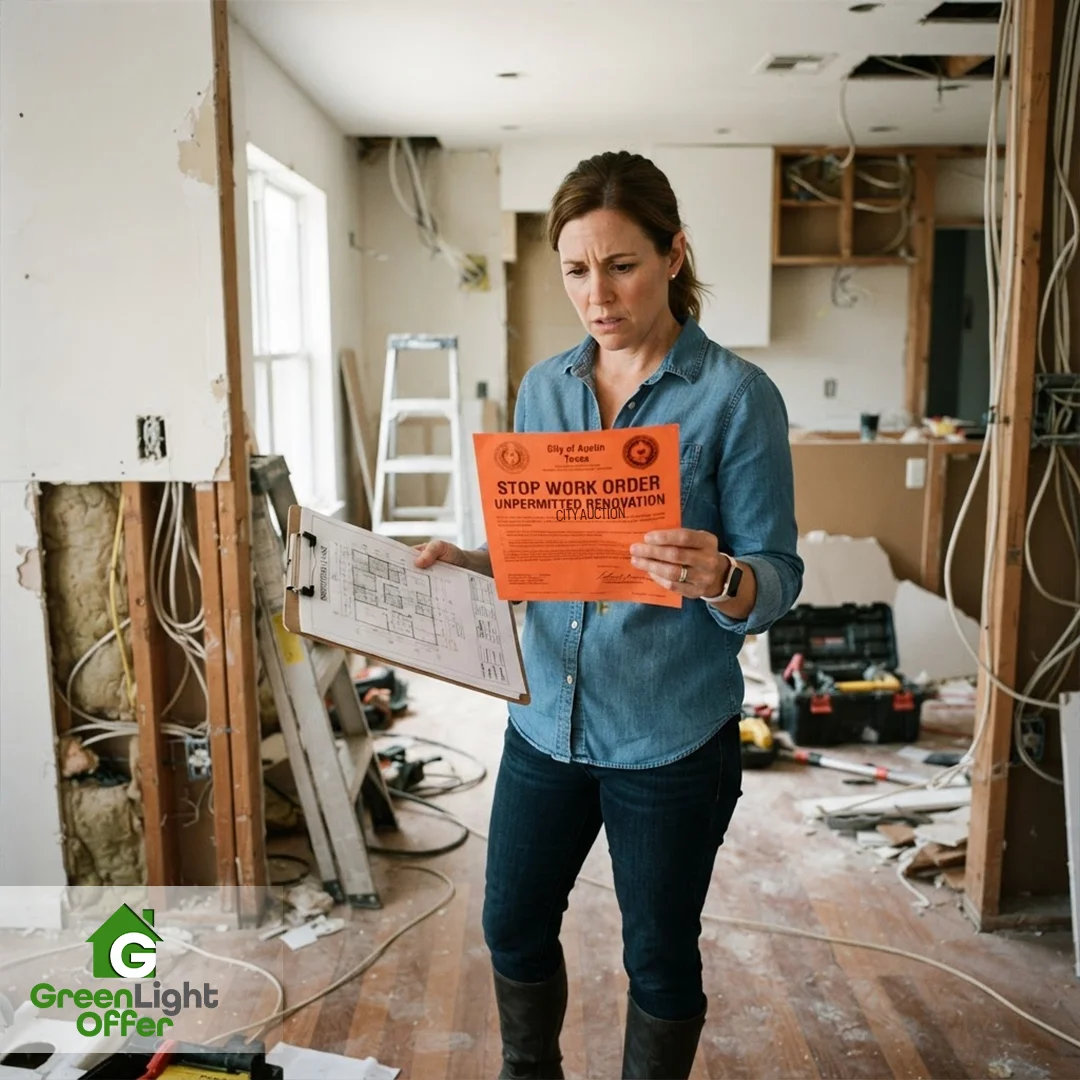
A title company that finds an open permit will typically note it as an exception on your title commitment rather than refuse to close. The title commitment is the document that lists everything standing between a clear title and closing, and an open permit usually shows up there as an item to resolve or waive before the buyer’s policy is issued.
For a financed buyer, the lender often wants that exception cleared before funding, which can mean closing the permit, getting a letter from the city, or negotiating a holdback of funds until the work is finished. For a cash buyer, the exception can sometimes be accepted as-is, with the buyer taking on the item after closing instead of asking the seller to fix it first. This is one of the clearest practical differences between a financed sale and a cash sale when a permit issue shows up mid-contract.
How to Check for Open Permits or Unpermitted Work on Your Property
You can check for open permits or unpermitted work through the Houston Permitting Center’s online permit search, a title company search, or by reviewing your own past disclosure paperwork and receipts.
- Search Houston Permitting Center records by your property address for any permit marked open or expired without a final inspection.
- Pull your Harris County Appraisal District record and compare the listed square footage and structures to what is actually built.
- Ask your title company to run a search early, before you accept an offer, rather than finding out mid-contract.
- Ask the previous owner directly, or reread your own closing disclosure from when you bought the house, for any mention of past work.
- Walk the property and compare every addition, converted room, and outbuilding to what shows up on file.
Why This Comes Up So Often in Houston
Unpermitted work shows up often in Houston because the city does not use traditional zoning, and a lot of home improvement in this market happens without a contractor ever pulling a permit. Garage conversions, backyard casitas, patio covers, and added rooms are common in older Houston neighborhoods where a permit was never on anyone’s radar at the time.
In some Houston-area MUD and PID districts, drainage easements and setback rules add another layer of review for anything built near a property line. That review step is one more reason additions in these districts often end up without paperwork, since a homeowner may not realize a second layer of approval was ever required.
A lot of it also comes down to when a house was built. Bungalows and ranch homes from the 1950s through the 1970s often picked up a converted garage, an enclosed carport, or a rear apartment over the decades, usually done by whichever owner needed the extra space at the time. Newer additions like a bonus room over a garage or a detached office in the backyard run into the same gap when a homeowner assumes a small project does not need a permit, when Chapter 10 says otherwise for anything that adds living space or touches electrical and plumbing systems.
None of this means your house is unusual or that you did something wrong. It means the paperwork caught up with the property later than the work itself did, which is normal in a city that has grown as fast as Houston.
Why Unpermitted Work Scares Off Traditional Buyers
Unpermitted work scares off traditional buyers because it threatens the appraisal, the buyer’s financing, and their insurance coverage all at once.
An appraiser who spots an addition with no matching permit on file will usually flag it, which can trigger a lender-required repair or a lower appraised value. A buyer’s financing contingency gives them an easy way to walk away if the lender will not fund the loan as-is. Insurance underwriters ask similar questions, since an unpermitted room or structure may not be covered the same way a permitted one is. We cover this in more detail in why mortgage lenders reject homes with code violations.
None of this applies to a cash purchase. A cash buyer is not asking a lender to underwrite the property, so there is no appraisal contingency standing between an accepted offer and a closed sale.
Your 3 Options for an Open Permit or Unpermitted Addition
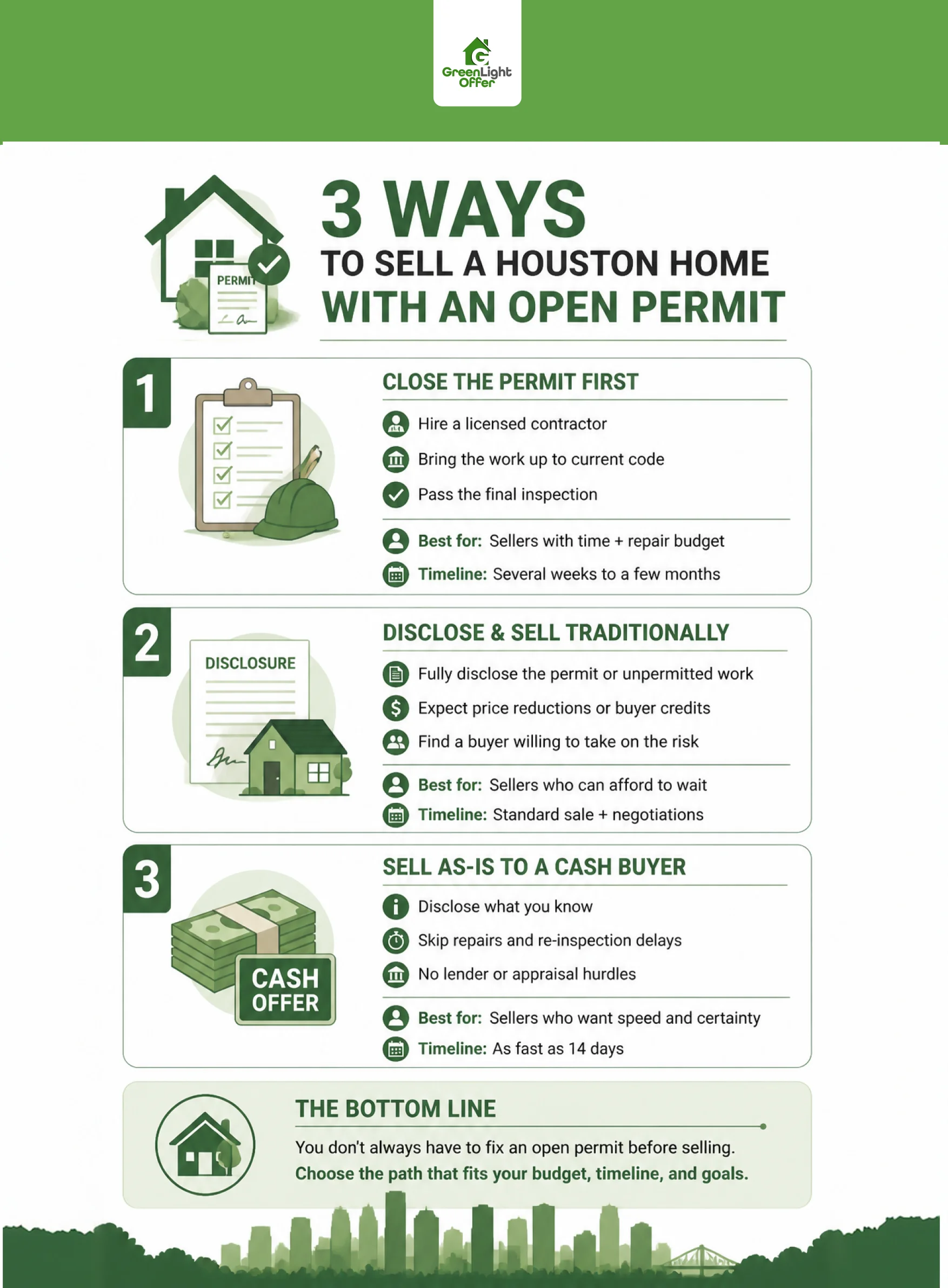
You have three realistic paths when you are trying to sell a house with an open permit or unpermitted addition in Houston: close the permit first, disclose it and sell at a discount to a traditional buyer, or sell as-is to a cash buyer.
| Option | What It Involves | Typical Timeline | Best For |
| Close the permit before selling | Hire a licensed contractor, bring the work up to current Chapter 10 code, schedule and pass a final inspection. | Several weeks to a few months, depending on scope | Sellers with time and a repair budget who want the widest possible buyer pool |
| Disclose and sell traditionally at a reduced price | List the home with a full Texas Property Code 5.008 disclosure, then negotiate a price credit with the buyer | Standard days on market, plus negotiation time | Sellers who do not want to do the repair work but can wait for a financed buyer |
| Sell as-is to a cash buyer | Disclose what you know, skip the repair and re-inspection cycle entirely | As fast as 14 days from accepted offer | Sellers who want certainty now and want the buyer to take on the open item |
Option 1: Close the Open Permit Before Selling
Closing the permit yourself may involve hiring a qualified contractor, addressing the work identified by the city, and completing any inspections or documentation required to close the permit. Resolving the issue can make the property easier for some traditional buyers and lenders to evaluate, but the exact requirements depend on the permit and the work involved. This option can also require more time and money up front, especially when the original work needs substantial corrections before the city will close the permit.
This path makes the most sense when the work itself is minor, the repair cost is predictable, and you have several months of runway before you need to sell. It makes far less sense when the addition is large, the original work was done without any permit at all, or you are already juggling carrying costs like a mortgage, taxes, and insurance on a house you are not living in. Before choosing this route, compare the potential repair costs with the financial trade-offs of selling the property as-is.
Option 2: Disclose and Sell Traditionally at a Reduced Price
You can also disclose the open permit or unpermitted work in full and sell to a traditional buyer at a reduced price. Some buyers, and some lenders, will accept the property as long as the price reflects the risk they are taking on. This route keeps you in the traditional market, but it usually means a longer time on the market while you find a buyer willing to work through it.
Expect more negotiation on this path than a typical sale. A buyer’s agent will usually ask for a credit, a price reduction, or a holdback of funds at closing to cover the eventual cost of resolving the permit. You are still responsible for full disclosure either way, so the discount tends to reflect real risk rather than just buyer leverage.
Option 3: Sell Your House With an Open Permit As-Is to a Cash Buyer
Selling your house with an open permit as-is to a cash buyer means you disclose the issue, skip the repair and the re-inspection wait, and close on your own timeline. There is no appraisal to fail and no lender asking for a scope of work before they will fund the loan, since the purchase never depends on their approval in the first place.
We have worked through permit and title snags with sellers before. Mr. and Mrs. Al Green, who sold us a rental property, credit our team, Chris, Isaac, and Jacob by name, with staying accommodating and working through a snag with them rather than walking away from the deal.
Do You Have to Disclose Unpermitted Work When Selling in Texas?
Yes, Texas Property Code Section 5.008 generally requires sellers of covered residential property to provide a seller’s disclosure notice, and the statutory form specifically asks whether the seller knows about room additions, structural modifications, alterations, or repairs made without necessary permits or not in compliance with applicable building codes. The law also contains exceptions, so sellers should consider their specific situation rather than assuming every property transaction is covered in the same way. We walk through the full disclosure rule, including timing, exemptions, and what sellers should consider when they discover unpermitted work, in our guide on disclosing known code violations when you sell in Texas.
Houston’s code enforcement authority for permits and unpermitted construction falls under Chapter 10 of the city’s building and neighborhood protection ordinances. This is the same framework that defines the broader types of code violations in Houston, including the various building, property, and maintenance issues the city may address. Reading through these provisions can help clarify how Houston classifies unpermitted work, which types of violations may apply, and how the city approaches construction completed without the required permits.
Frequently Asked Questions About Selling a House With an Open Permit
Will an open permit show up in a title search?
An open permit may be discovered during the property and title review process, but whether it appears in a particular title search can depend on the records involved and how the property is being reviewed. Houston permit records can also be searched by property address through the city’s permitting system, giving sellers another way to check for open permits before listing.
How much does it cost to close an open permit in Houston?
Costs vary widely based on the scope of the original work and what the final inspection requires today. A small electrical or plumbing correction might run a few hundred dollars in permitting fees plus contractor labor, while bringing an entire unpermitted addition up to current code can run into the thousands. Permitting fees themselves are usually the smaller piece of the bill. The higher cost is almost always the contractor work needed to bring the item up to today’s Chapter 10 standard, not just the standard that applied when the work was originally done. Get a quote from a licensed Houston contractor before you commit to this path, since the range is genuinely wide.
Can a buyer back out because of an unpermitted addition?
Yes. A financed buyer usually has an appraisal contingency or a financing contingency that lets them walk away if the lender will not approve the loan with the unpermitted work in place. A cash buyer has no lender to satisfy, so this specific exit does not apply the same way.
Do I need to disclose a permit I already closed?
If the permit is fully closed with a passed final inspection, there is nothing open left to disclose about that specific item. You still need to disclose any other known conditions or past issues under Texas Property Code 5.008, so keep your closed permit records handy in case a buyer or their agent asks for proof. A closed permit with a matching final inspection is actually a point in your favor during negotiations, since it gives a buyer’s lender something concrete to verify instead of relying on your word alone.
Sell Your Houston House With an Open Permit, As-Is
You do not necessarily have to resolve an open permit or unpermitted improvement before selling your Houston house. Your options may include resolving the issue first, disclosing it and working with a traditional buyer, or selling the property as-is to a cash buyer. The best choice depends on the condition of the property, the scope of the permit issue, your timeline, and what you are willing to spend before closing.
If you want to avoid taking on repairs or navigating the permitting process yourself, Greenlight Offer buys Houston homes as-is and can work around your preferred closing timeline. You can request a free cash offer and discuss the permit or code issue with the team before deciding whether a cash sale is right for you.
