
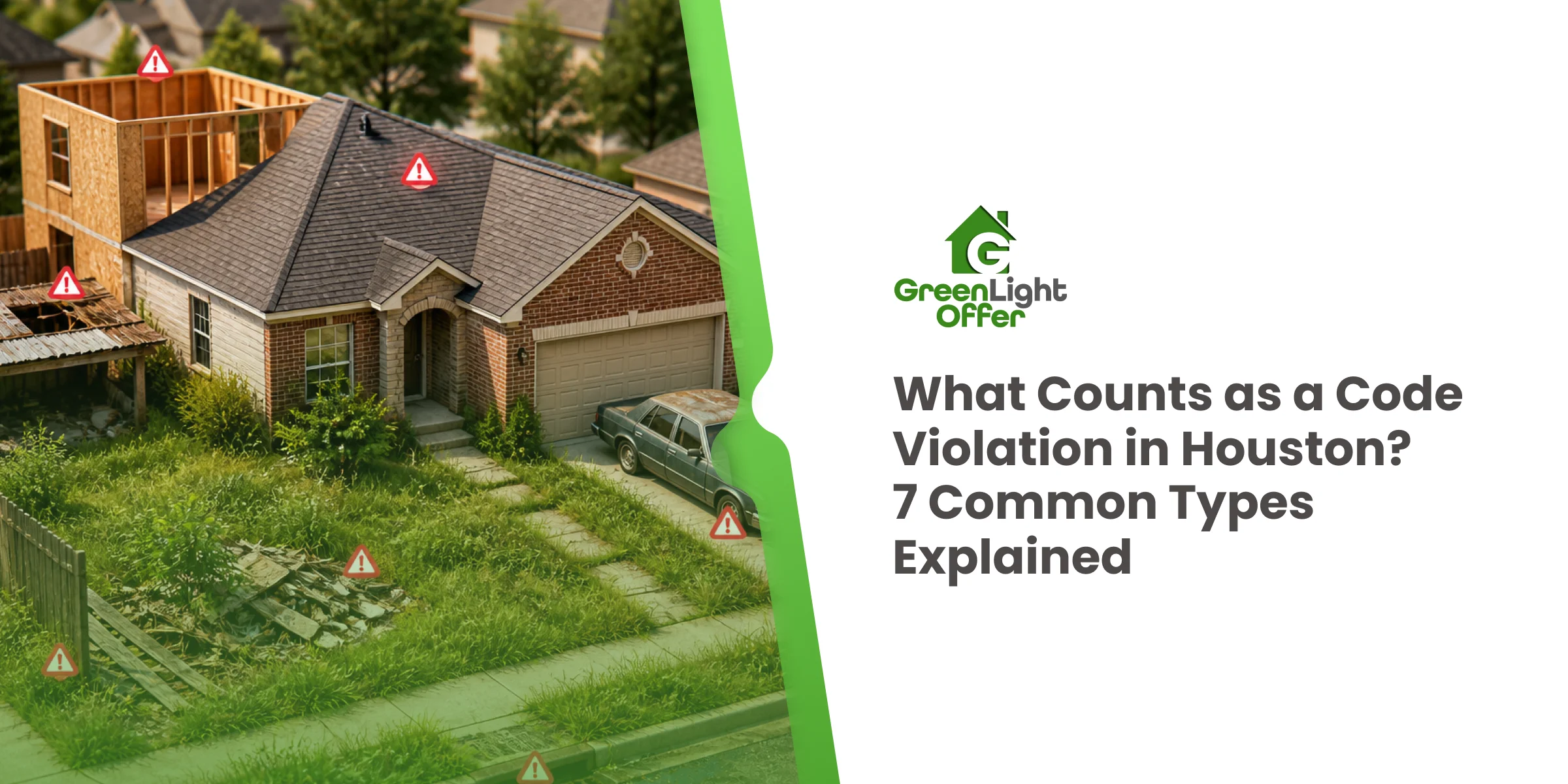
A yellow notice on your door or a letter from the city can turn a normal week upside down. If you are asking what counts as a code violation in Houston, you are probably trying to understand what the notice means and what you need to do next. Houston enforces building, property maintenance, safety, and nuisance requirements through its Code of Ordinances, with Chapter 10 covering Buildings and Neighborhood Protection. Violations can range from unpermitted work and property maintenance problems to serious building and safety issues.
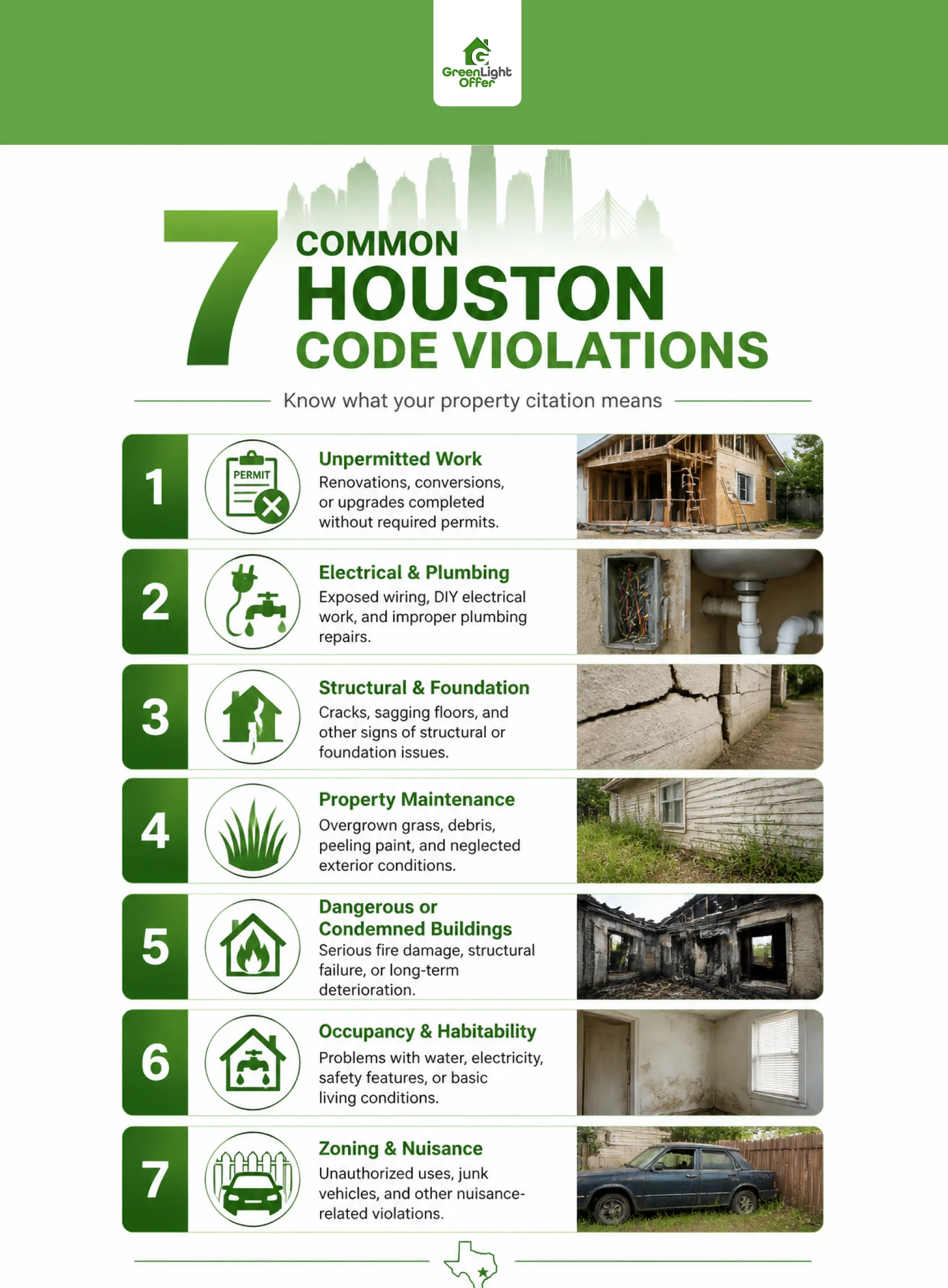
A code violation in Houston is any condition on a property that breaks a rule in the city’s Code of Ordinances, most often Chapter 10, which covers buildings and neighborhood protection. The seven most common types are unpermitted work, electrical and plumbing problems, structural or foundation issues, overgrown lots, dangerous building status, occupancy and habitability problems, and zoning or nuisance complaints.
A few things surprise most sellers once they start digging into their own notice:
- A violation usually starts with something visible from the street, not a formal inspection.
- Houston has no traditional zoning code, so many “zoning” complaints are really nuisance ordinance issues.
- An open violation does not always show up in a routine title search.
- A repaired violation can return if the underlying cause, like soil movement, was never fixed.
- You can legally sell a house with an open violation in Texas as long as you disclose it.
What Is a Code Violation in Houston? (Quick Answer)
A code violation in Houston is any condition that fails to meet the standards in the city’s Code of Ordinances, with many building and property-related violations covered under Chapter 10, Buildings and Neighborhood Protection. The city’s code enforcement officials investigate reported violations and conduct inspections, then issue written notices explaining the problem and the correction deadline. If you’re trying to sell your Houston house with code violations, understanding which category yours falls into is the first step toward deciding what to do next.
Who Enforces Code Violations in Houston?
Houston Public Works handles Community Code Enforcement and building code enforcement for the city. Code enforcement activity can begin after a 311 complaint, an inspection, or other information that brings a potential violation to the city’s attention. Chapter 10 of the Houston Code of Ordinances provides the framework for many building, neighborhood protection, and dangerous-building matters, while other violations may fall under different city codes or departments.
An inspector can usually view the exterior of a property from a public right-of-way without your consent. An interior inspection generally requires your permission or a court order. That distinction matters because many owners assume a citation means someone walked through their home, when in most cases the entire case was built from the street or from public permit records.
We buy properties across the Houston area, including neighborhoods covered on our Houston home buyers page, and code enforcement activity varies block by block within the same zip code. Older neighborhoods with more original 1950s and 1960s housing stock tend to see more structural and electrical citations, while newer subdivisions see more property maintenance and HOA-adjacent complaints.
The 7 Most Common Code Violation Types in Houston
Not every violation carries the same weight. Some are quick paperwork fixes, and others put a property on a path toward a hearing. Here is what each type actually means.
1. Unpermitted Work
Unpermitted work is the single most common violation type in Houston. A garage conversion, an added bedroom, or an electrical panel upgrade done without a permit can trigger a citation years after the work was finished, often when a new owner or an appraiser notices it. If this describes your property, our guide on selling a house with an open permit walks through your specific options.
2. Electrical and Plumbing Violations
Exposed wiring, DIY electrical work, and failed plumbing repairs fall into this category. These citations tend to move quickly because they involve safety, not just paperwork. An inspector may require a licensed contractor to correct and re-inspect the work before signing off. Homeowner-installed panel upgrades and unlicensed water heater swaps are two of the most common triggers we see in older Houston homes.
3. Structural and Foundation Violations
A structural code violation usually starts with a visible crack, a sagging floor, or a door that no longer closes. In Houston, most of these citations trace back to soil movement rather than poor construction. See our full breakdown of foundation-related code violations for why these issues tend to repeat.
4. Property Maintenance and Overgrown Lot Violations
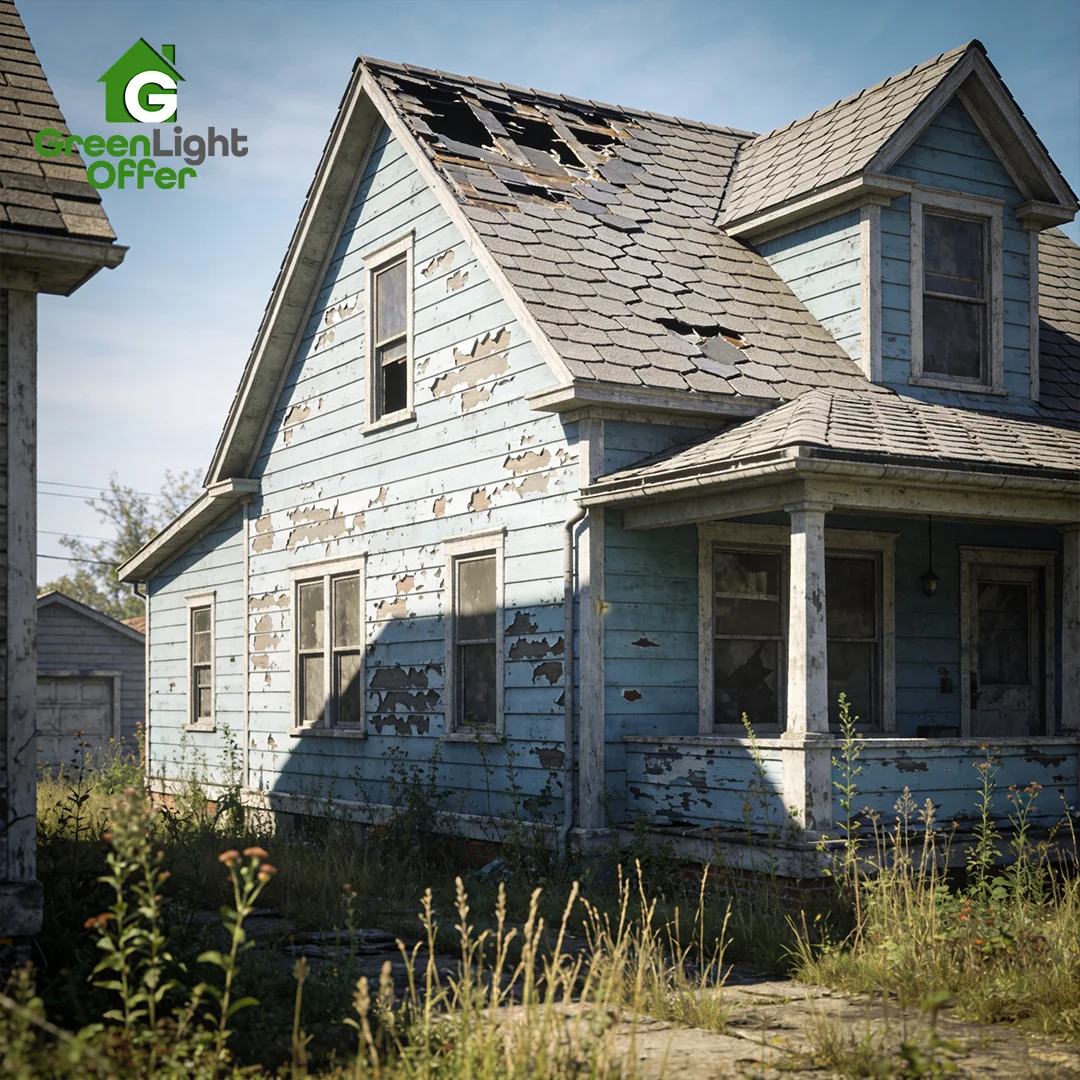
Overgrown grass, accumulated debris, and peeling exterior paint fall under property maintenance rules. These are usually the lowest-risk violations and carry the shortest correction windows, but repeat citations on the same address can still lead to fines. Vacant and inherited properties see this type of citation more often, simply because no one is mowing the lawn or checking on the house every week.
5. Dangerous Building and Condemned Status
Fire damage, long-term vacancy, or serious structural failure can push a property into dangerous building status. This is a more formal, later-stage designation that follows its own legal process. Read our full guide to the dangerous building and condemned property process if your notice mentions a hearing or a compliance order.
6. Occupancy and Habitability Violations
A property without working water, electricity, or basic safety features can be cited for occupancy or habitability problems. These citations often apply to rental properties, but they can also apply to a vacant home that has fallen into disrepair. A tenant complaint is one of the more common ways this type of case reaches Houston Public Works in the first place.
7. Zoning and Nuisance Violations
Houston does not use traditional zoning, but the city still restricts things like unauthorized home businesses, junk vehicles, and certain land uses through its nuisance ordinance. These citations are almost always complaint-driven. If you’re also dealing with an HOA notice on the same issue, see code violations vs HOA violations for how the two processes differ.
Comparison Table: Violation Type, Typical Trigger, and Urgency Level
Here is a quick side-by-side view of all seven types.
| Violation Type | Common Trigger | Urgency / Fine Risk | Who to Contact |
| Unpermitted Work | Addition, conversion, or remodel with no permit on file | Moderate to high; may need retroactive permitting | Houston Permitting Center |
| Electrical / Plumbing | Exposed wiring, DIY repairs, failed inspection | High; safety-related | Houston Public Works code enforcement |
| Structural / Foundation | Visible cracks, sagging, soil movement | High; can escalate to dangerous building status | Code enforcement inspector |
| Property Maintenance | Overgrown lot, debris, exterior disrepair | Low to moderate; short correction window | Neighborhood code enforcement team |
| Dangerous Building | Fire damage, structural failure, long vacancy | Severe; can lead to a demolition order | Building standards official |
| Occupancy / Habitability | No working utilities, unsafe living conditions | High; safety concern | Code enforcement plus health department |
| Zoning / Nuisance | Home business, junk vehicles, unauthorized use | Low to moderate; complaint-driven | 311 or code enforcement |
How Does the City of Houston Find Out About a Violation?
A potential violation can come to the city’s attention through a 311 complaint, an inspection, follow-up activity, or information connected to permits and other city records. For building code complaints, Houston’s process routes reports to the appropriate enforcement team, which investigates whether a violation is actually present. Understanding the source of a complaint helps explain why two similar properties can have very different enforcement histories.
- 311 complaints from a neighbor or a passerby
- Routine code enforcement sweeps in older neighborhoods
- Permit audits when a contractor pulls a permit for related work nearby
- Insurance inspections or mortgage appraisal visits that flag visible issues
- Follow-up checks after a previous violation at the same address
How to Read a Houston Code Violation Notice
A code violation notice can look more complicated than the underlying problem. Before hiring a contractor or putting the property on the market, pull out the notice and identify the information that determines what happens next.
Look for these five items:
- The property address: Confirm that the notice applies to the correct property and unit.
- The specific violation: Look for the description of the condition and the ordinance or code section cited.
- The correction required: Determine whether the city is asking you to repair something, remove something, obtain a permit, correct a safety issue, or take another action.
- The deadline: Note the date by which you must correct the issue, respond, or appear for a hearing.
- The inspector or department contact: Keep the contact information so you can ask questions about the required correction.
The most important item is the difference between fixing the property and closing the case. Completing a repair does not necessarily mean the city’s record is automatically cleared. If reinspection or documentation is required, you may need to complete that step before the violation is considered resolved.
If the notice is unclear, contact the person or department identified on the notice before spending money on major work. A clear understanding of the required correction can prevent you from fixing the wrong problem or completing work that does not satisfy the cited requirement.
What Happens After You’re Cited?
Once a violation notice is issued, the process generally follows the same pattern, whether the citation is for an overgrown lot or a structural crack. Knowing the sequence ahead of time makes each step less stressful, because you know what to expect before the next letter arrives.
- Notice of Violation: You receive a written notice naming the code section and the problem.
- Correction Deadline: You get a window to fix the issue or respond to the inspector.
- Reinspection: An inspector checks whether the correction was completed.
- Escalation: If the issue is not corrected, the case can move toward fines or a lien on the property.
- Appeal Option: You can also appeal a code violation citation if you believe it was issued in error or the issue is already fixed.
What Happens If You Ignore a Houston Code Violation?
Ignoring a violation rarely makes the underlying issue disappear. What happens next depends on the type of violation, the language of the notice, and whether the owner responds or completes the required correction.
A typical progression can include:
- The deadline passes: If the required correction is not completed or the city does not receive the required response, the case can remain open.
- The city follows up: A reinspection, additional notice, citation, hearing, or other enforcement step may follow depending on the case.
- Costs can increase: An issue that might have been relatively inexpensive to correct can become more expensive if additional penalties, professional fees, emergency repairs, or legal proceedings become involved.
- The property can become harder to sell: An unresolved violation creates uncertainty for buyers. Even if a buyer is willing to purchase the property, they may use the cost and risk of resolving the violation as leverage during negotiations.
- A serious case can escalate: Structural, safety, and dangerous-building cases deserve particular attention because the consequences can go beyond a simple maintenance correction.
The key point is that receiving a notice does not automatically mean the property is in the worst possible category. It means you should identify the specific violation, understand the deadline, and determine the least costly way to resolve or address it before the case progresses.
How a Code Violation Affects Selling Your Houston Home
A code violation touches more of the sale process than most sellers expect, from the buyer pool you attract to the price a buyer feels comfortable offering. Understanding each piece separately makes it easier to plan your next move instead of reacting to whatever a buyer’s agent says at the last minute.
A code violation does not stop you from selling your Houston home, but it changes who can realistically buy it and how the deal moves. A financed buyer’s lender usually orders an appraisal, and an appraiser can flag an open violation under the loan’s appraisal contingency, which can pause or kill the financing. See our guide on why mortgage lenders reject homes with code violations for the full breakdown.
If you know about a condition affecting the property, disclosure obligations can apply under Texas law, but the exact requirement depends on the facts and the information being disclosed. For that reason, sellers should review the applicable disclosure requirements and, when necessary, get legal advice rather than treating every code violation as having the same disclosure rule. Our page on disclosure obligations under Texas Property Code 5.008 covers the topic in more detail.
If you’re weighing whether to fix the violation first, our repair or sell as-is cost comparison walks through both paths side by side, including carrying costs and an example net-to-seller estimate for each option.
None of this means a citation should force a rushed decision. If your house is in decent shape, the violation is minor, and you have several months of runway before any deadline, a traditional listing after a quick correction may still net you more once you compare the numbers. A cash sale solves for speed and certainty, not for topping the market in every situation.

Frequently Asked Questions About Code Violation Types in Houston
Can I sell my house if it has an open code violation?
Yes. Texas law does not stop you from selling a house with an open code violation. You must disclose known violations under Texas Property Code 5.008, and many buyers, including cash buyers, will still make an offer on the property as it sits. The buyer pool typically narrows to cash and investor buyers, since a financed buyer’s lender will usually want the issue resolved first.
Do all code violations show up in a title search?
No. Some violations are recorded against the property, especially once a lien attaches, but many are only tracked internally by Houston Public Works. A buyer may not see an open violation unless they request a permit history search directly from the city, order an inspection, or notice something during a walkthrough.
How long does the city give you to fix a violation?
Timelines vary by violation type and case, so check the deadline printed on your specific notice. Most standard notices give a set correction window before reinspection. For serious substandard-building cases, Texas Local Government Code Section 214.001 provides a process that can allow up to 90 days for compliance when a scope-of-work plan is presented at the required hearing. Ask the inspector directly if your notice does not spell out a clear deadline.
Is a code violation the same as a condemned property?
No. A code violation is a citation for one specific issue on a property. Condemned or dangerous building status is a more serious, later-stage designation reached through a formal hearing process. See our full dangerous building and condemned property guide for how that process works.
What should I do first if I get a code violation notice in Houston?
Read the notice carefully, note the code section and the correction deadline, and take dated photos of the property’s current condition. Then contact the inspector listed on the notice to confirm exactly what correction they expect before that deadline.
Does a code violation lower my home’s appraisal value?
It can. An appraiser working on a financed sale may treat an open violation as a health, safety, or soundness issue, which can reduce the appraised value or stall the loan until it’s corrected.
Sell Your Houston House With Code Violations As-Is
A code violation does not automatically mean you have to complete every repair before selling your Houston house. Your options depend on the type of violation, the condition of the property, the city’s requirements, and your timeline. If you are comparing the cost of repairs with the time and uncertainty of selling traditionally, an as-is sale can be one option to consider.
If you want to explore that option, learn more about selling your home as-is in Houston or get your free cash offer. You can review your options without committing to a sale.
